


From Innocence to Desire: The Process of Isolation
The journey from knowing we are pure to accepting we are guilty

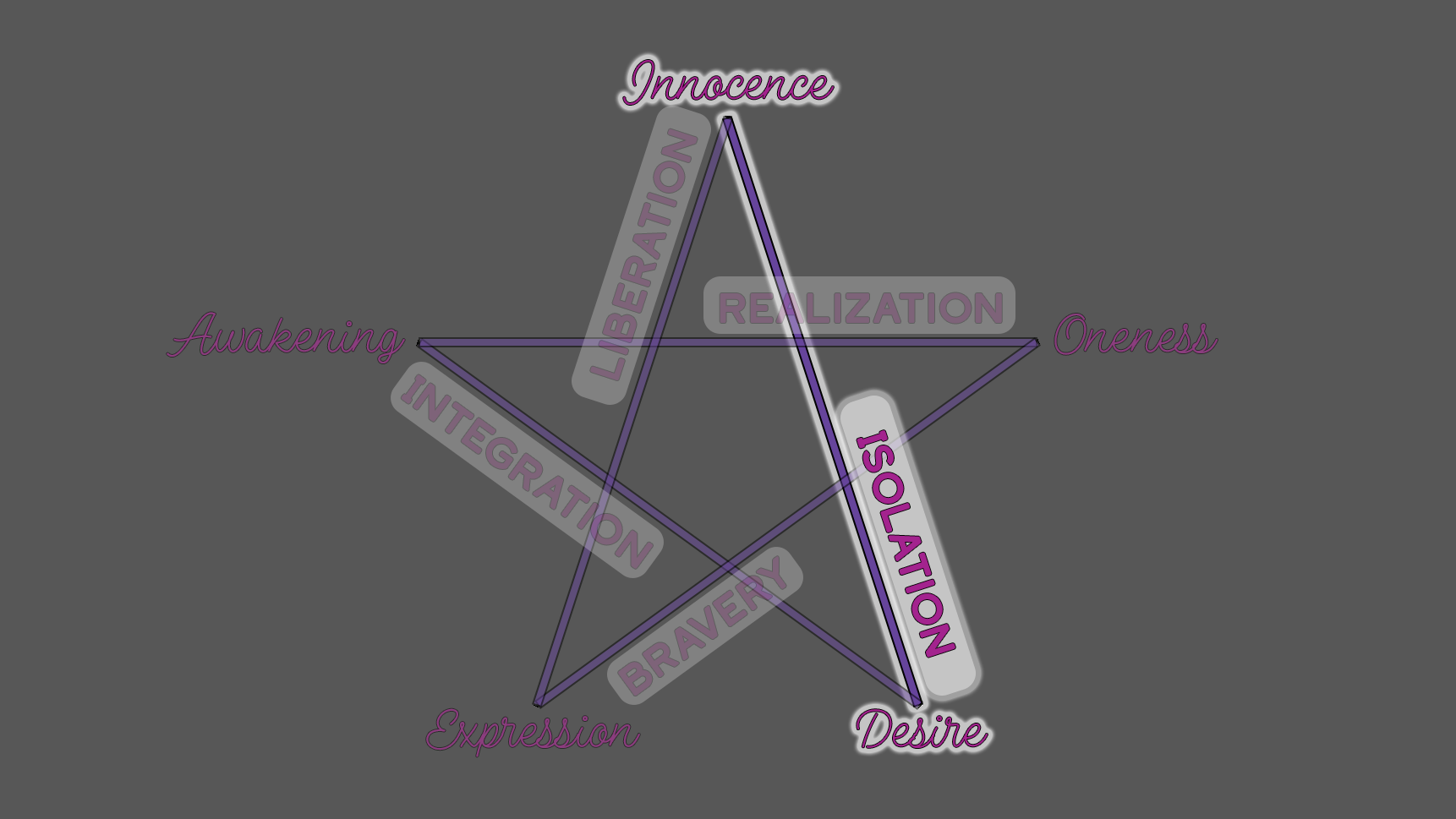
In the last article introducing the Amethyst Pentacle, we found a model composed of five states of human experience connected by five processes to evolve from one state to the next in an unbroken cycle. In this article, we investigate the very beginning (and end) of the cycle.
Innocence is the state in which we are unaware of any substantive difference between us and the rest of the world. Obviously, every human looks unique and expresses themselves in a unique way, but each of us does so in a way that falls within social norms.
In the state of Innocence, we perceive social norms, but we do not believe we differ from them in any way that might be important to others. We are free from the guilt of failing to fulfill social norms.
Guilt and shame dissolve the purity of Innocence, forcing us to confront who we are and how we continue to fit within the social environment. This confrontation is the hard work of the Amethyst Pentacle - Innocence, once lost, can be regained.
When we own the differences between us and social norms, we return to Innocence, which is why it represents both the first and last state in the Amethyst Pentacle. The question, then, is how do we inherit guilt or shame from the social environment?
From acceptance to difference
In his 1963 book Stigma, Erving Goffman defined two phases to becoming aware of substantive differences between us and the rest of the world. The first phase is experiencing the expectations of the social environment around us - that is, learning the social norms.
At first, we experience social norms in the state of Innocence. We learn what is expected of us and believe those social norms have value because the social environment values them. We want to fulfill social norms, because to do so means acceptance from those around us.
But as we become wholly engaged in the attempt to fulfill social norms, we might learn we possess a characteristic that prevents us from fulfilling it. It is this discovery that Goffman calls stigma: "the situation of the individual who is disqualified from full social acceptance."
Maybe we question whether a boy may wear a dress, whether a girl may kiss a girl, or whether the son of a doctor may become an artist. If the answers to those questions differ from the expectations we learned, we realize we are not the same as other people around us.
We begin to understand what our social standing will become if we express our stigma in the social environment. Do we choose to pretend we don't have the stigma? Do we stay in the closet? Or do we come out of the closet and try to integrate as best we can?
The moment of choice
We don't have to answer the questions we face. We could stop here. We could remain in a state of Innocence. A third choice exists in our attempt to reconcile the stigma we must express within the social environment we hope will accept us.
The third choice is to believe the social norm is wrong.
We can critically evaluate the social norm and determine the difference we discovered between us and other people is not substantive. Although the social environment promotes the social norm, our assessment proves fulfilling it should not be important to acceptance.
In effect, we assert our stigma is "right" behavior and the social environment exhibits "wrong" behavior. This act of courage is not unheard of. Social environments evolve through the efforts of those who reject existing social norms to establish new ones.
But the process of changing a social environment is daunting, and likely filled with hate and discrimination. Social norms exist in order to perpetuate a social environment. Those who stand against them are corrected until they either conform or leave.
Whether we possess the strength to stand against the social environment or the apathy to abandon the social environment, we find ourselves in a very small group, indeed. We find ourselves in the process of Isolation.
Accepting guilt in isolation
The state of Innocence is lost through the process of Isolation. We recognize who we are, what we like, and what we aspire to are different from others in the social environment in a way that matters.
Whether we know why our differences matter or not, we recognize we can no longer be blind to them. We can no longer co-exist peacefully within the social environment. We must resolve our cognitive dissonance or suffer.
Innocence is the state in which we do not perceive differences between us and others. Isolation is the process of assuming guilt through perceiving our differences and judging them irreconcilable. We believe the social environment is justified in upholding the social norms, and we are guilty of failing to fulfill them.
But we do not judge who we are, what we like, and what we aspire to as different and guilt-inducing. Our characteristics are vital parts of our identity, and we judge our innate humanness as different and worthy of guilt.
We stand alone in the stark spotlight of judgment. The process of Isolation forces us to view ourselves in a group of one. And unfortunately, that one might not be very popular.
Kindling Desire
Feeling the guilt of our stigma, we retreat into Isolation and ruminate. Perhaps we consider whether becoming aware was worth the trouble it brought. Perhaps we lament that ignorance truly is bliss. Perhaps we mourn our Innocence.
But often we return to the characteristic that distinguishes us from our social environment. Often we consider that aspect of who we are, that object we like, that goal to which we aspire. We return to it because it is important to us - important enough to sever us from our former social environment.
Before we allow ourselves to believe living with stigma promises only an unfulfilled life, we must find confirmation. Are there others with our characteristics? Do others like the same objects we do? Could others aspire to the goals we do?
Isolation forces us to confront our essential differences, but Isolation also encourages us to immerse ourselves deeply within them. We must know more. We must understand more. We must experience a life that might mean more.
Innocence drains through the process of Isolation, yet Isolation catalyzes the search for Integration. From one is born the quest for many.
We enter the next state of human experience. We begin to feel Desire.
The views and opinions expressed are those of the authors and do not necessarily reflect the offical policy or position of The Purplepaw Clan, LLC. Please view the Disclaimer page for further information.